
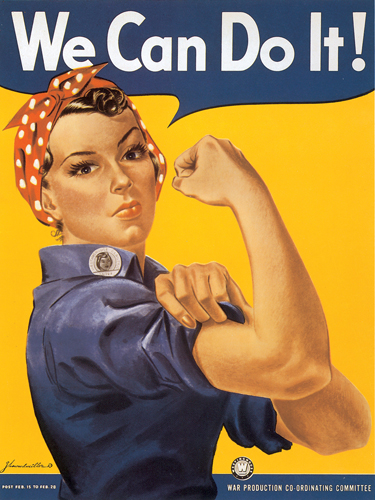










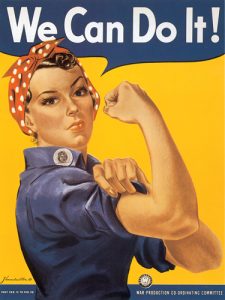
Women’s History Month is derived from humble origins, first beginning as a local “Women’s History Week” in Sonoma County, California, in 1978 to account for the lack of female representation in history. However, following the popularity of the week, President Jimmy Carter issued the first presidential proclamation for National Women’s History Week in 1980, and Congress would later expand the week into the entire month of March. The month celebrates the achievements and work of influential women throughout history.
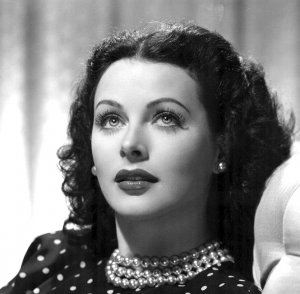
One such woman, Hedy Lamarr, is credited with pioneering foundational science that would lead to many of the most prevalent inventions used today, such as WiFi and
Source: https://www.womenshistory.org/education-resources/biographies/hedy-lamarr
Bluetooth. She debuted into history as an actress in Old Hollywood, starring in blockbuster films such as Samson and Delilah (1949), Boom Town (1940), and White Cargo (1942), amongst many others. While becoming a Hollywood star, Hedy Lamarr co-invented a secure, “frequency-hopping” radio system during World War II to protect Allied torpedo signals from being jammed for the Army. Her invention laid the foundation for modern wireless technologies, such as Wi-Fi, Bluetooth, and GPS.
Initially, the Army did not accept her new technology. Her technology was considered too complex for her time, and additionally, due to sexism and her status at the time, her technology was dismissed. Instead, it was adopted after the war, laying the foundation for WiFi— but Hedy scarcely received any recognition until the 1990s, where she was finally honored and had her invention credited to her. She later passed away in 2000, living life in seclusion, leaving behind both a legacy as a remarkable Hollywood legend, and a pioneer of technology (Cheslak).
Source: https://www.womenshistory.org/education-resources/biographies/sojourner-truth
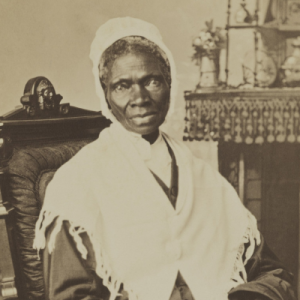
Sojourner Truth, perhaps, is a more famously-known woman from history. Born a slave in 1797 by the name of Isabella Baumfree, she fervently believed that God had put her on Earth to preach goodness. She escaped to freedom in 1826 against the highly oppressive regime of slavery, a nearly impossible feat for women of her age, and yet, performed an even more impressive duty- she won the first lawsuit against a white man, and sued him for wrongfully selling her son. She also was a literary genius, despite never being formally taught to read or write, and gave many pro-abolitionist speeches, a famous one being her 1851 speech, “Ain’t I A Woman?” at the Women’s Rights Convention in Akron, Ohio, advocating for equal rights for all. She also met with Abraham Lincoln during the Civil War and again, advocated, this time for the distribution of land amongst the now freed people. She died in 1883 as a progressive activist, for two causes thought to be radical back then- equal rights, and women’s suffrage (Yamamoto).
Source: https://www.womenshistory.org/education-resources/biographies/patsy-mink
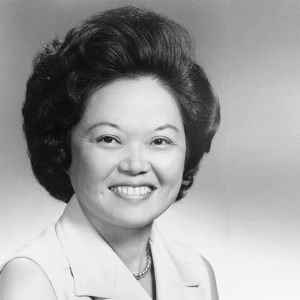
Patsy Mink was the first ever Asian-American woman to ever be elected to Congress. Born in Hawaii, she graduated with a law degree, and became one of the first Japanese-American women to ever practice law in Hawaii. Her legacy is most famously known for the laws she passed through Congress- most remarkably, the Women’s Educational Equity Act, which promoted equal teaching and opportunities for all women, regardless of color, a giant leap for progressing feminism at the time. She served in The House of Representatives from 1965-1977, and again from 1990-2002, also becoming the first Asian-American woman to run for president, in 1972. She served as a political proponent for equality until her death in 2002, leaving a lasting mark on society today (Lee).
All in all, these women, though they all worked in different fields, and lived in radically different times, all shared one thing in common- they blazed a trail for women of their time, and women today.
Works Cited
Alexander, Kerri Lee. “Patsy Mink.” National Women’s History Museum, 2019, www.womenshistory.org/education-resources/biographies/patsy-mink.
Cheslak, Colleen. “Hedy Lamarr.” National Women’s History Museum, 2018, www.womenshistory.org/education-resources/biographies/hedy-lamarr.
Michals, Debra. “Sojourner Truth.” National Women’s History Museum, 2015, www.womenshistory.org/education-resources/biographies/sojourner-truth.
“Women’s History Month.” National Women’s History Museum, www.womenshistory.org/womens-history/womens-history-month.