

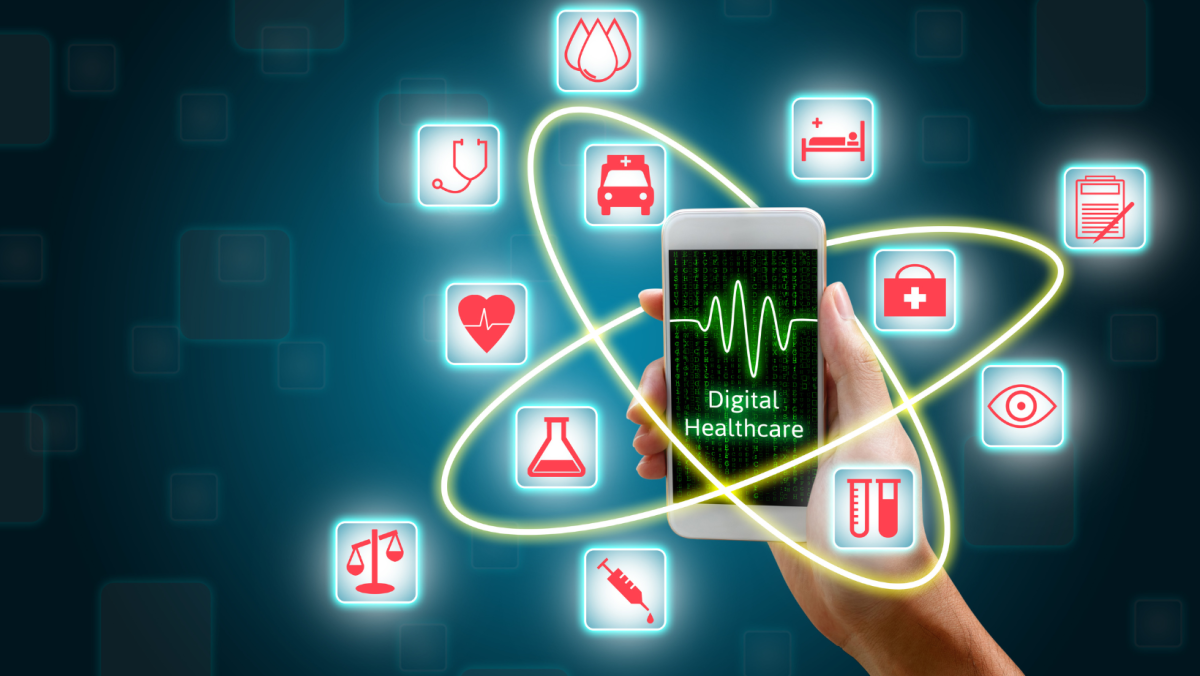






















By 2030, artificial intelligence in healthcare is projected to save the U.S. medical industry over $150 billion annually, which signals not just cost efficiency, but a complete reimagining of how we diagnose, treat, and prevent disease (Bohr & Memarzadeh, 2020). New technologies are changing the way care is delivered, how information is managed, and how patients interact with medical professionals. Countries with advanced healthcare systems, including the United States, Japan, England, and France, have already begun to see major improvements in efficiency and patient outcomes as a result of these innovations. Some of the strongest developments include artificial intelligence (AI), telemedicine, and the continued workings of electronic health records (EHR). Together, these technologies are revolutionizing the healthcare industry, and eventually, the healthcare industry will reach its most successful and cost-effective point yet.
Artificial intelligence has become one of the most powerful tools in modern healthcare. Its ability to analyze large amounts of data quickly allows medical professionals to make more informed decisions. AI systems can examine medical images, identify abnormal conditions, and assist in diagnosing conditions with a level of precision that humans are largely incapable of (Cleveland Clinic, 2024). This technology also plays a growing role in predicting patient outcomes, identifying risk factors, and personalizing treatment plans. Additionally, AI-driven robotics are increasingly used in surgical procedures, where they enhance accuracy and reduce recovery times. As AI continues to evolve, it is expected to support nearly every aspect of clinical practice, from data analytics to the development of new medications.
Telemedicine has also become an essential part of modern healthcare as it allows patients to receive medical care and treatment online without ever needing to travel to a physical clinic. This is especially useful for people in rural or underserved areas. Through virtual appointments, remote monitoring, and digital communication tools, patients can connect with healthcare providers more easily and more frequently. The widespread adoption of telemedicine during the COVID-19 pandemic demonstrated its effectiveness and convenience, and it has remained a very helpful feature in many healthcare systems. Imagine how many people that had family members struggling with COVID, that with the help of telemedicine, were able to receive real time help from a doctor within the comfort of their own home. Telemedicine helped millions of patients by getting them assistance at home, so they could receive care while in quarantine. Telemedicine also involves the use of eHealth and wearables. Wearables are devices people can wear to track their health in real time, such as their heartbeat and other vital signs. Combined with eHealth, this can be a useful way that patients can keep track of their own health. Telemedicine not only expands access to care but also reduces wait times, lowers costs, and helps physicians manage larger patient populations more efficiently.
Another major advancement is the improvement of electronic health records. EHRs have transformed the way patient information is stored, shared, and utilized. Instead of relying on paper files that can be lost or damaged, healthcare providers now have access to secure digital records that can be updated in real time. This allows for better coordination among physicians, faster access to medical histories, and fewer errors caused by incomplete or outdated information (Alder, 2025). Modern EHR systems also can integrate with other technologies, including AI tools and telemedicine platforms, which creates a more efficient healthcare environment. Additionally, the HITECH (Healthcare Information Technology for Economic and Clinical Health) Act of 2009 incentivizes hospitals to use EHR systems in the hospital. As these systems continue to advance, they will support more personalized care and improve communication between patients and providers.
Together, these innovations enhance accuracy, expand access, and make care more available to the needs of diverse populations. As these technologies continue to evolve, they hold the potential to create a healthcare system that is not only more efficient, but also more equitable and patient‑centered. The ongoing integration of these technologies show that the future of medicine will be more connected, more intelligent, and more capable of improving health outcomes on a global scale. In many ways, this is only the beginning of a new era of healthcare technologies.
References
Alder, S. (2025, April 3). What is the HITECH act? The HIPAA Journal. https://www.hipaajournal.com/what-is-the-hitech-act/
Bohr, A., & Memarzadeh, K. (2020). The Rise of Artificial Intelligence in Healthcare Applications. Artificial Intelligence in Healthcare, 1(1), 25–60. NCBI. https://doi.org/10.1016/B978-0-12-818438-7.00002-2
Cleveland Clinic. (2024, September 5). How AI is being used to benefit your healthcare. Cleveland Clinic. https://health.clevelandclinic.org/ai-in-healthcare
Ezeamii, V. (2024). Revolutionizing healthcare: How Telemedicine Is Improving Patient Outcomes and Expanding Access to Care. Cureus, 16(7). https://doi.org/10.7759/cureus.63881
Uslu, A., & Stausberg, J. (2021). Value of the electronic medical record for hospital care: Update from the literature. Journal of Medical Internet Research, 23(12). https://doi.org/10.2196/26323